
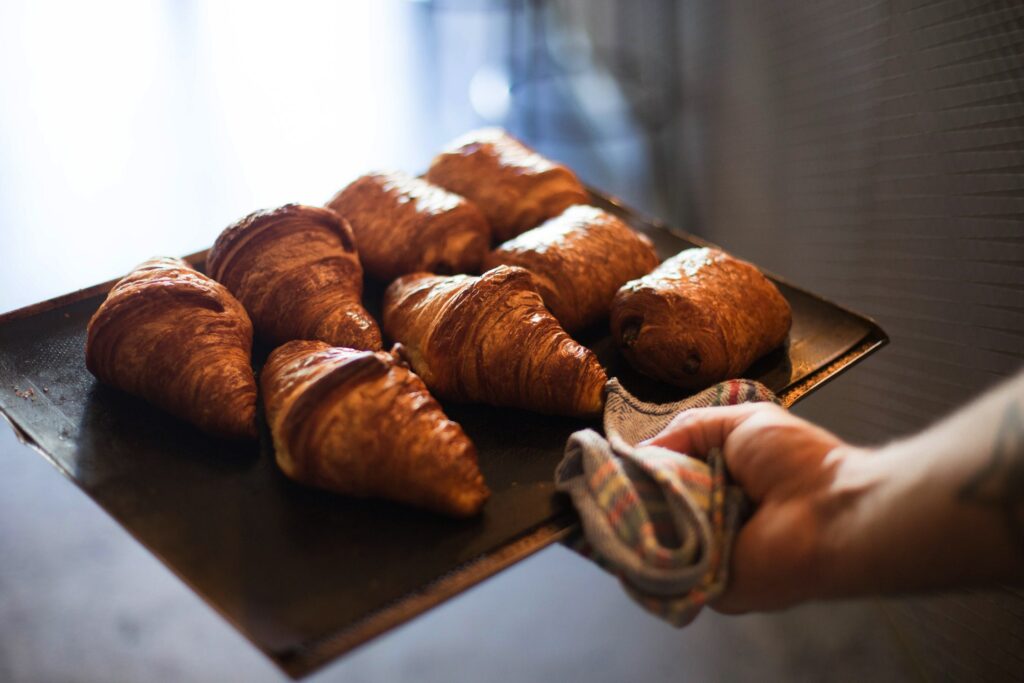
Golden, flaky, and wonderfully buttery, the French croissant is one of the most iconic pastries in the world. Visitors searching for the best croissants in Provence often imagine it as a timeless symbol of French gastronomy, but its story is far more surprising. Before sharing our recommendations for the best croissants in Aix-en-Provence and Marseille, let’s explore the fascinating history behind this legendary pastry — and why it remains essential to the French breakfast tradition.
The Surprising Origins of the Croissant
The history of the croissant is filled with captivating stories, and while this pastry is now a symbol of France, its origins lie elsewhere. Many historians trace the croissant back to Austria and the traditional kipferl, a crescent-shaped pastry enjoyed since medieval times.
Another widely shared legend connects the croissant to the Ottoman siege of Vienna in 1683. According to this tale, Viennese bakers working overnight heard enemy soldiers tunneling beneath the city walls. Their warning helped save Vienna, and to celebrate, the bakers created a crescent-shaped pastry inspired by the Ottoman flag.
One of the most charming and enduring versions of the story involves Marie Antoinette. As the story goes, the young Austrian archduchess missed the pastries of her homeland after arriving in France. To bring a taste of Vienna to Versailles, she introduced the kipferl to the French court. French bakers embraced and refined this foreign pastry, and over time—thanks to the development of laminated dough—the kipferl evolved into the flaky French croissant we know today.
While these stories blend myth and history, one thing is certain: France perfected the technique and elevated the croissant into a culinary icon.
How the Croissant Became Truly French
The croissant’s transformation into a French staple accelerated in the 19th century. In 1839, Austrian entrepreneur August Zang opened a “Boulangerie Viennoise” in Paris. His pastries became wildly popular and inspired French bakers to reinterpret and refine the recipe.
The introduction of laminated dough—thin layers of dough alternated with butter—marked the defining evolution of the modern croissant. By the early 20th century, the croissant had become a standard offering in French bakeries and an essential part of the French breakfast tradition.
Today, travelers in Provence seeking an authentic culinary experience often begin their mornings with a freshly baked croissant.
What Makes a Truly Excellent Croissant?
A perfect French croissant requires precision, technique, and high-quality ingredients. Several elements are essential:
Premium Butter (82% fat or higher)
This is key to achieving the rich flavor and delicate aroma associated with artisanal croissants.
Expert Laminating Technique
The dough is folded multiple times with butter to create dozens of layers — the source of the croissant’s signature flaky texture.
Long Fermentation
Slow fermentation enhances flavor complexity, making each bite more aromatic and satisfying.
Golden, Crisp Exterior + Airy Interior
The contrast between a shattering crust and a soft, honeycombed crumb defines the ideal croissant.
When all these elements come together, the result is a pastry that is light, fragrant, and unforgettable.
Where to Find the Best Croissants in Aix-en-Provence
If you’re staying in Aix and searching for the best croissants in Aix-en-Provence, here are some top bakeries:
-
Pâtisserie Weibel – Delicate, buttery classic croissants
-
Maison Saint-Honoré by Pierre Ragot – Known for premium ingredients and artisanal craftsmanship
- Manlio’s Boulangerie – Impressively fluffy croissants
Where to Find the Best Croissants in Marseille
For anyone exploring Marseille, don’t miss these top croissant makers:
-
Pain Pan – Renowned for its artisanal quality and impressive lamination.
-
La Boutique du Glacier – A Provence classic with perfectly flaky croissants.
-
Carlotta With – Beloved for natural ingredients and traditional techniques.
How to Enjoy a Croissant the French Way
In France, a croissant is usually eaten plain — no butter, no jam needed. Its flavor stands on its own. Pair it with a café crème, sit on a sunny Provençal terrace, and you have the essence of a perfect French morning.
Though variations exist, such as almond croissants or savory filled croissants, locals agree: the pure, buttery croissant remains the gold standard.
Learn to Make Your Own Croissants in Provence
If you’re passionate about French pastries, why not try baking your own? Our Croissant & French Pastry Workshop in Aix-en-Provence offers a hands-on introduction to traditional viennoiserie techniques. Guided by expert pastry chefs, you’ll learn everything from dough preparation to lamination and shaping.
This immersive class is perfect for travelers looking to experience authentic French baking — and bring home a new culinary skill.
Ready to bake your own croissants? Book your workshop today and start your delicious journey into the art of French pastry.